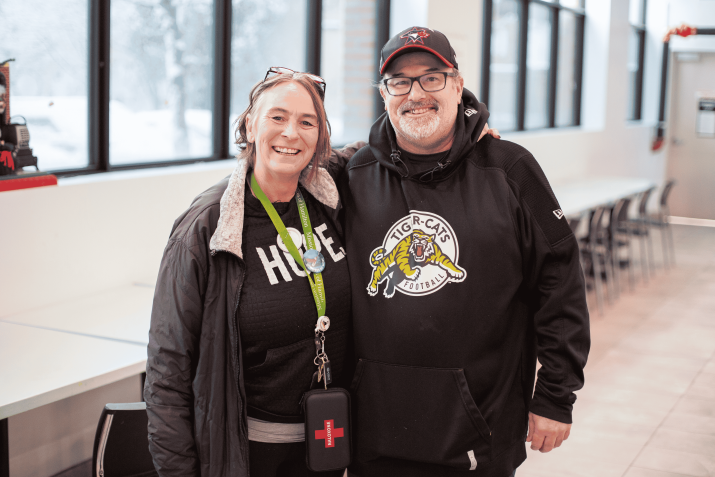
The Harm Reduction journey starts with hope, belief, and humanity.
When Michelle tells people about her job as a Harm Reduction Worker, everyone has a different idea of what that means.
For Michelle, it’s quite simple: “I help people reduce harm.”
Maybe it’s not that simple, but there is definitely a clear first step on the journey.
“We start by giving people hope,” Michelle explains. “Support begins by helping them believe in themselves, and showing them they’re still a human being first and foremost.”
Michelle works with especially vulnerable populations. She is part of a mobile treatment team that offers education and connections to treatment options. Her team helps clients staying in shelter take positive steps towards achieving healthy goals.
Many people don’t have the means or the ability to access inpatient addiction treatment, so Michelle is able to fill that gap and make a difference by bringing accountability and goal-based treatment to them.
“Once we treat people with humanity, they can start following through on their goals. For most people in this world that have an addiction, their end goal is abstinence, but sometimes it feels so far away.”
Michelle says that the way to accomplish what seems to be impossible is just to take one step at a time.
“What if we looked at someone and said, ‘Yes, you can do that, how can we get you to that end goal?’”
“Goals have to be realistic and achievable, because once you realize that you can succeed in little things, the bigger things become easier.”
“It can be something as simple as making it to an appointment on time. That’s a step, and that step becomes another, which becomes another.”
Addiction often develops as an unhealthy coping method to manage stress, emotional pain, or life challenges. Each situation is different, so it’s important that each person is presented with a plan that helps them succeed.
“Every person is unique. Some people are similar, but you will never find two people with exactly the same story, so we have to help each person in the way that best suits their unique situation. If together, we can find a new coping method, we can set them up for success.”
“Harm reduction work is incredibly personal work. People have to trust you, understand that you deeply care about them, and know that you have their best interests at heart.”
Their journey begins with love, care, and compassion.
“It takes someone to treat them like a human being, come alongside them, and say, ‘I’m here for you, whenever you’re ready, even if you don’t feel like you deserve it.’”
Michelle is confident in one specific thing that she’s learned during her time in the field: Outcome-focused harm reduction works.
“Sometimes the journey takes longer than expected, but I’ve seen people move from tents to housing, parents reunited with their children, and even some people becoming addiction workers themselves.”
“Recovery is a lifelong journey, but if we begin from the root and give them belief and a purpose, their recovery can last a lifetime.”